Tokyo features

The Joy of Japanese Stationery

Some people understand Japan through temples. Some through food. Some through trains, gardens, cafés, or seasonal sweets. And some understand it the first time they pick up a notebook that opens perfectly flat, a pen that moves with improbable smoothness, a tiny ruler that fits inside a pencil case, or a sheet of stickers so well designed it feels slightly unreasonable.

Japanese stationery has a way of making ordinary life feel more gracious. It turns planning, writing, carrying, marking, organizing, remembering, and even making mistakes into activities touched by care. That is its real joy: it does not only help you do things. It helps you feel better while doing them.

Beautiful Japanese stationery laid out on a desk
Feature mood paper, pens, texture, tiny tools, useful beauty, calm desks, and the happiness of objects made with thought
Best for readers who love notebooks, paper, color, precision, daily rituals, and the emotional pleasure of good design in small things
A soft beginning

Stationery in Japan is rarely treated as trivial.

This may be the first thing to understand. In some places, stationery is something you buy when you need it and forget the moment after. In Japan, it often occupies a richer emotional space. It can be practical, yes, but also seasonal, giftable, collectible, calming, playful, beautiful, technically impressive, and quietly self-expressive.

A pen is not just a pen if its balance is right, its line is clean, its body is elegant, and its color makes the page feel more alive. A notebook is not only a container if its paper receives ink with grace and its cover seems to understand the kind of person you want to be while using it. A sticker sheet, memo pad, or washi tape roll can become not clutter but atmosphere.

This is why Japanese stationery can feel so disproportionately moving. It takes the small mechanics of daily life seriously. It assumes that tools shape mood. It assumes that usefulness and delight should not be strangers.

Chan-chan note
One of Japan’s quiet talents is its ability to make practical objects feel emotionally literate.
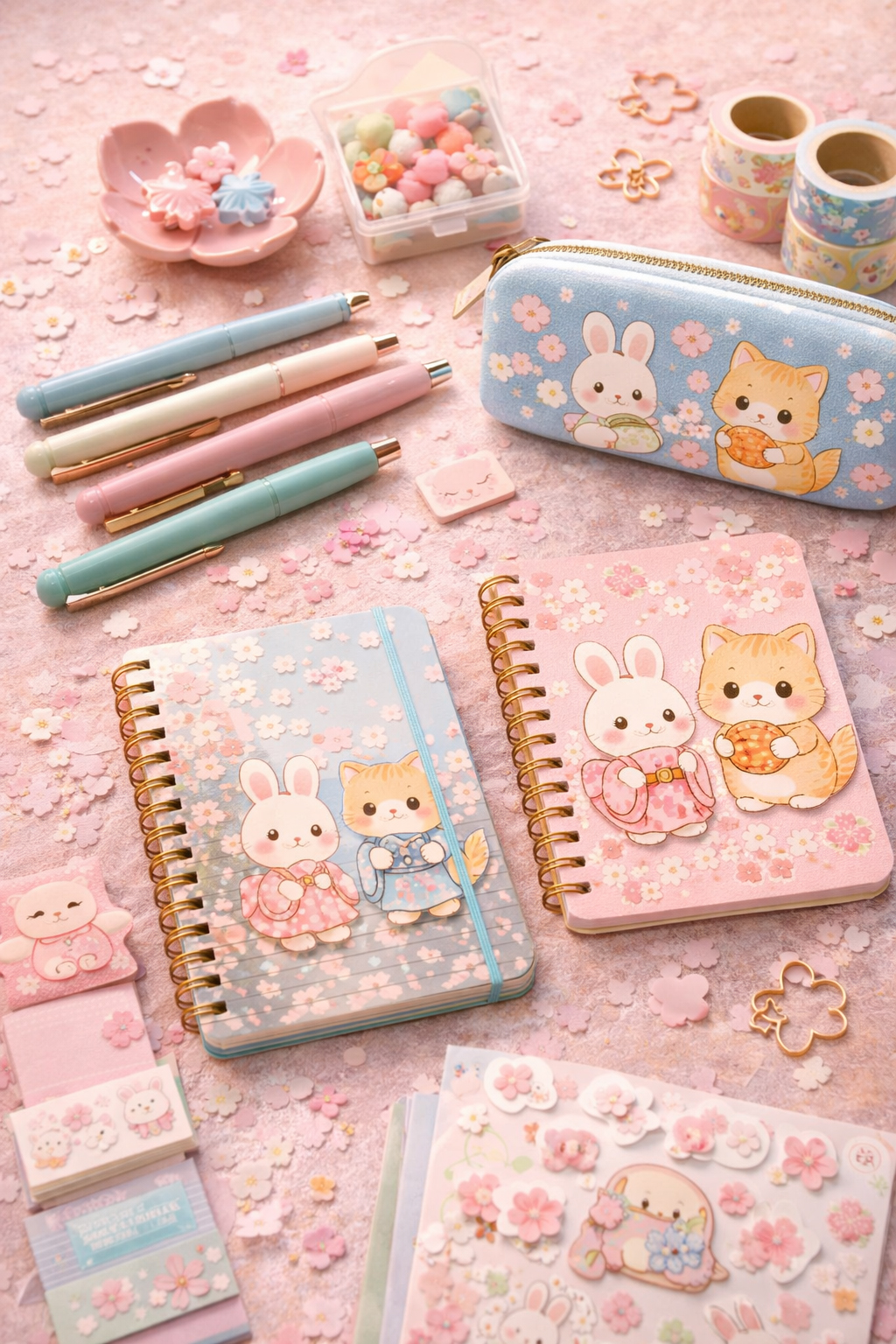
Colorful Japanese stationery collection
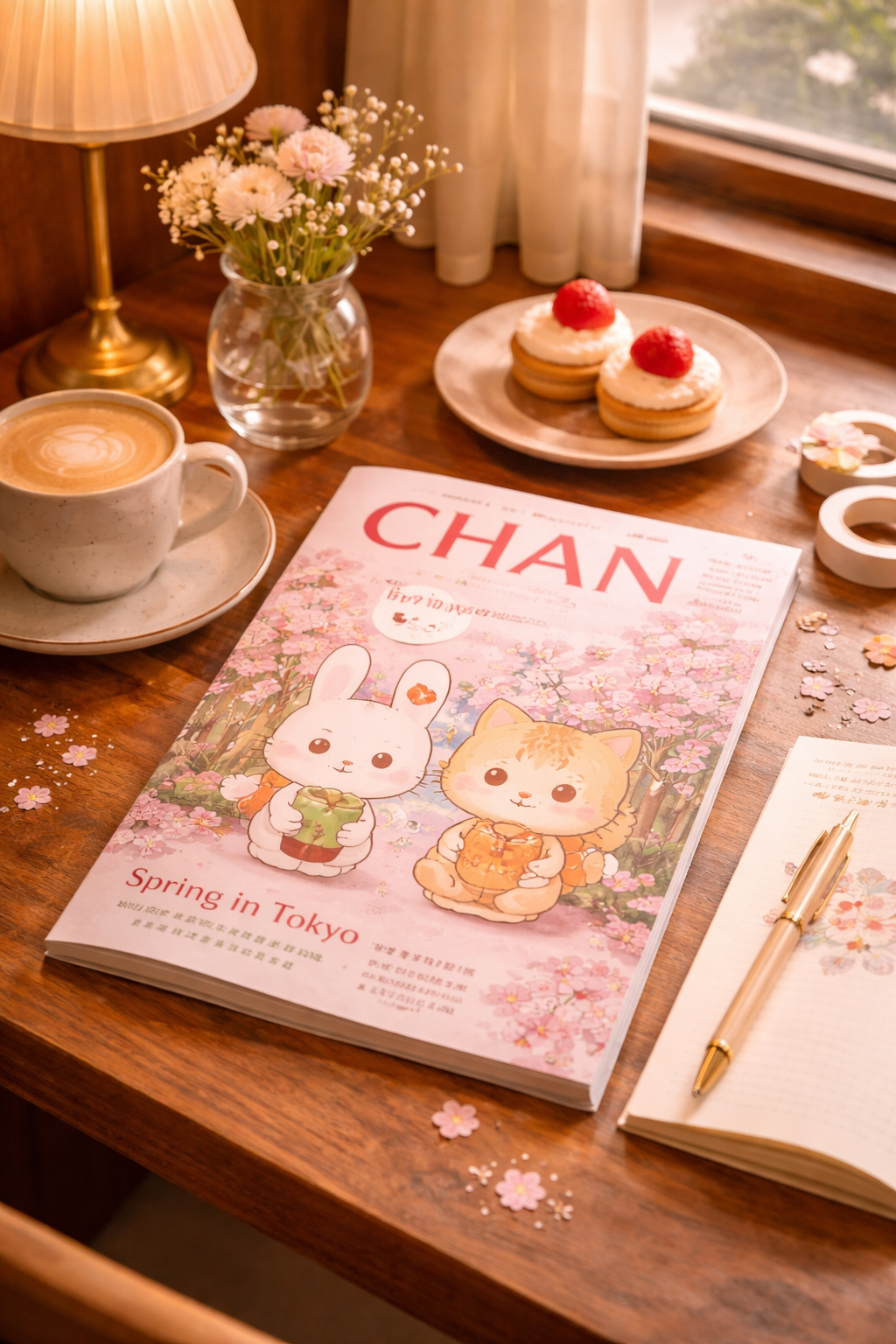
A cozy desk and magazine table mood in Japan
The joy itself

Why Japanese stationery feels so unusually satisfying

The answer is not one thing. It is a whole culture of attention compressed into paper goods and tiny tools.

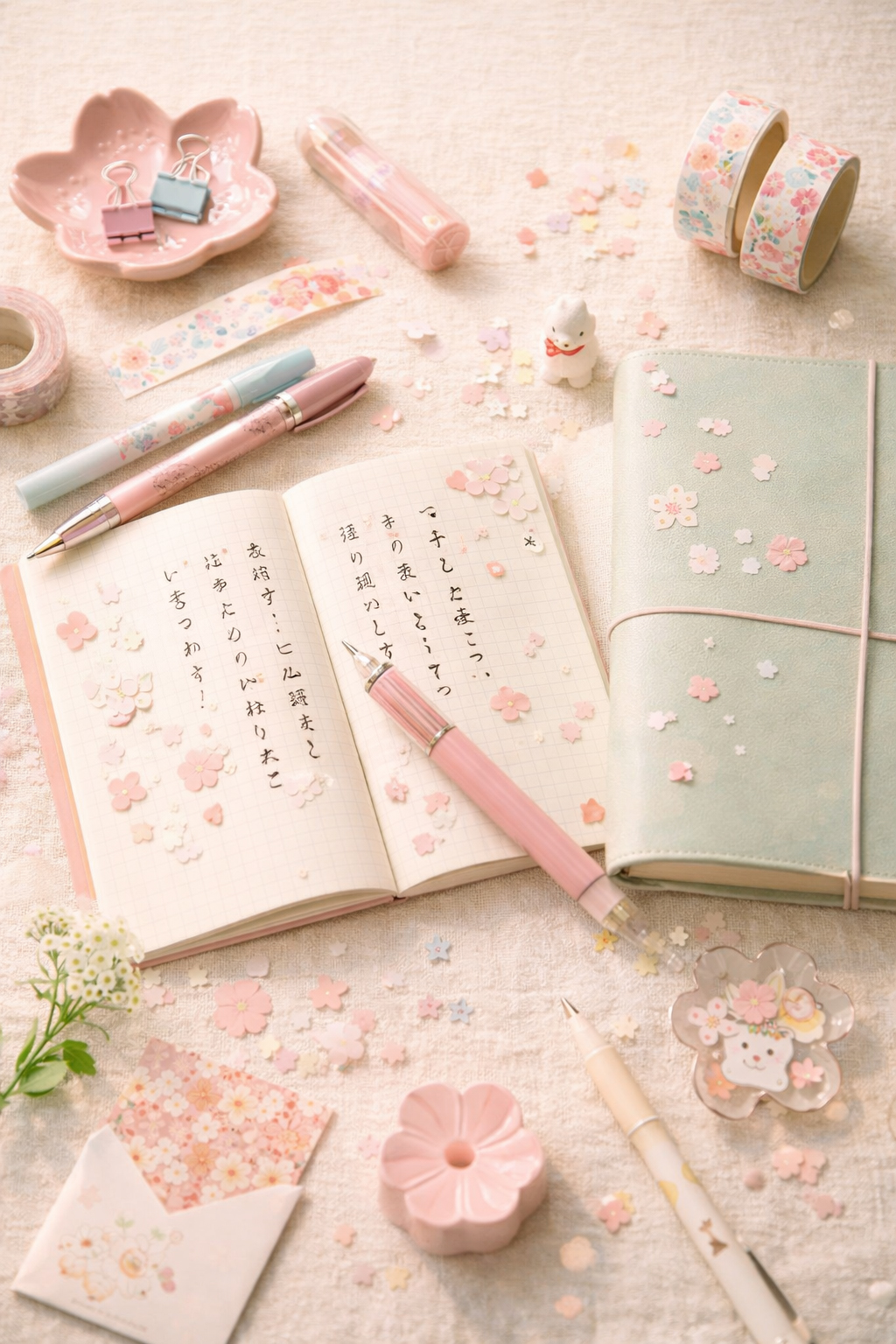
Pens and notebooks in a refined flatlay
Tools with dignity

Useful objects are allowed to be beautiful

One of the purest pleasures of Japanese stationery is that it does not force a choice between function and feeling. A tool can work well and still be graceful. A page marker can be efficient and still charming. A mechanical pencil can be precise and still have a little personality in its color, clip, or finish.

This matters because most of life is not made of grand gestures. It is made of recurring small actions. Writing a note. making a list. mailing a card. marking a calendar. carrying a folder. If these repeated acts are supported by objects that feel good in the hand and right to the eye, the emotional quality of ordinary life changes.

Japanese stationery seems to understand this deeply. It behaves as if the everyday deserves elegance too.
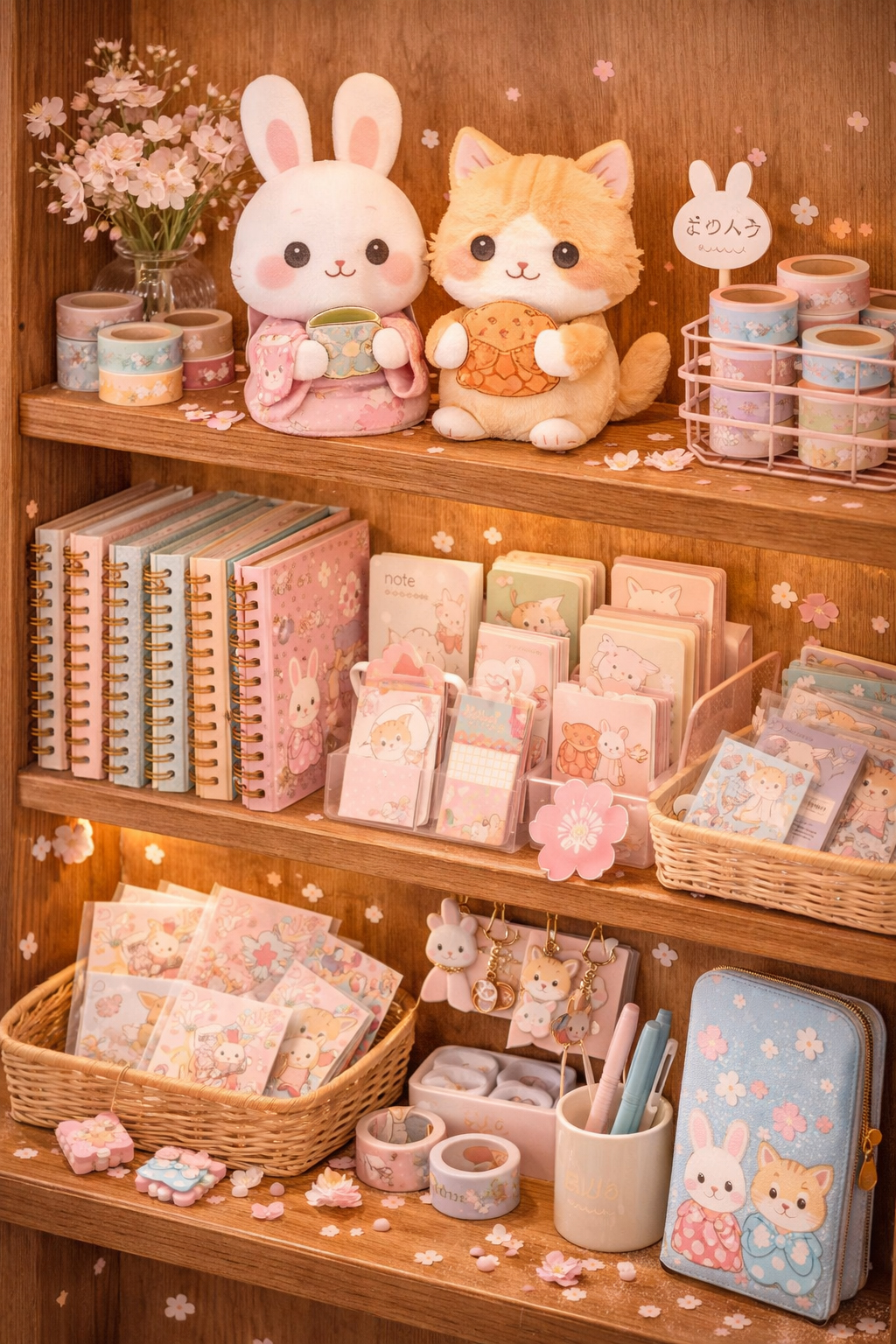
Colorful pens, tapes, and paper accessories
Color without chaos

Playfulness is often disciplined by design

Japanese stationery can be joyful, even exuberant, but it often remains composed. This is one reason it feels so satisfying. Cute does not necessarily mean messy. Colorful does not have to mean visually exhausting.

A set of sticky notes may use charming shades while still feeling balanced. A sticker sheet may contain many moods while keeping a sense of rhythm. A planner accessory can be playful without becoming childish.

The result is a rare kind of delight: you can enjoy brightness without feeling visually shouted at. The emotional tone stays cheerful, but it is cheerful with manners.

A cozy writing table with soft Japanese objects
Paper as atmosphere

The page itself can feel like a place

People who love Japanese stationery often talk about paper because paper changes the emotional meaning of writing. A page can feel sharp or soft, formal or intimate, absorbent or smooth, forgiving or exact.

This is not only a technical matter, though Japanese paper culture certainly includes technical excellence. It is also psychological. The right paper makes you want to write more carefully. Or more freely. Or more honestly. Or more beautifully.

A notebook with good paper does not simply record your thoughts. It alters the tone in which you think them.

Neatly arranged tools and pens
Miniature intelligence

Tiny tools become sources of disproportionate happiness

Part of the joy of Japanese stationery lies in small inventions: compact scissors, foldable rulers, slim glue tapes, correction tools, clips that solve a specific annoyance, cases that fit exactly what needs to be carried and not much more.

These objects often produce the kind of pleasure that belongs to good engineering and good manners at once. They say: someone noticed this problem. someone solved it neatly. someone cared enough to make the solution pleasant to use.

This is one of the deepest reasons Japanese stationery inspires affection. It carries visible intelligence without arrogance.

Cute and carefully arranged Japanese shop details
The gift of self-expression

Stationery lets personality appear in quiet ways

Not everyone wants to decorate themselves loudly. Stationery offers another route. Your notebook cover, pen color, letter set, planner layout, sticker choices, and folder design can all express taste without performance.

Japanese stationery is especially good at supporting this softer kind of selfhood. It gives people tools for making their desk, page, or school bag feel a little more like their own emotional territory.

This is why stationery can feel so intimate. It lives close to thought. It sits near memory, intention, study, work, and little private pleasures.

Small beautifully arranged everyday pleasures
Everyday joy made visible

It turns routine into ritual

The larger emotional gift of Japanese stationery may be this: it makes repeated actions feel worth attending to. You sharpen a pencil, open a planner, mark a page, choose a pen, place a sticker, tape a note into a journal, or write a little message in the margin.

None of these are dramatic acts. But when the objects involved are pleasing, the routine gains emotional texture. It becomes not merely something you have to do, but something you can inhabit with a little more calm or pleasure.

In a life that can feel rushed and fragmented, this is no small gift. It is a way of restoring dignity to little tasks.

Elegant Japanese paper and writing tools
Seasonality and collection

Stationery in Japan often knows the time of year

One reason stationery culture in Japan feels so alive is that it is not static. Designs change with the seasons. Sakura appears. hydrangea appears. autumn colors arrive. winter motifs become crisp and calm. limited editions create anticipation without necessarily becoming vulgar about scarcity.

This seasonal rhythm makes stationery shopping feel emotionally connected to the calendar. A new notebook can feel like spring. A letter set can feel like autumn. A memo pad can feel like rainy season.

In this way, stationery participates in one of Japan’s deepest cultural pleasures: letting the year become visible through small objects.

A thoughtful writing and reading atmosphere
The emotional truth

Good stationery makes people feel handled with care

This may be the most powerful explanation of all. Japanese stationery often feels good because it gives the impression that the user was imagined in advance. Not as a target, but as a person.

The pen sits well. the notebook lies flat. the pocket is exactly useful. the paper welcomes ink. the package opens neatly. the scale feels right. The object seems to say: we thought about the hand that would hold this.

People notice being thought about. Even by objects. Especially by objects. That is why a fine notebook or a small paper tool can produce genuine affection.

One reason Japanese stationery feels joyful is that it often treats usefulness as something that should arrive with grace.
It is function with feeling.

Where the joy appears

Three forms of stationery happiness people remember most

Not everyone loves the same part first.

Pens and paper on a Japanese desk
Writing happiness

The pen moves well and the page receives it kindly

This is the most immediate pleasure: the physical satisfaction of writing with a tool that feels stable, smooth, and right.

Bright and charming Japanese stationery collection
Visual happiness

The desk becomes prettier and calmer

The colors, shapes, and materials of Japanese stationery often create an environment you want to return to.

Carefully arranged cute objects in a Japanese shop
Collecting happiness

One good object makes you want to meet the others

Japanese stationery often invites ongoing affection. A notebook leads to a pen. A pen leads to a case. A case leads to stickers, clips, folders, and paper things you did not know you needed.

A quiet theory

Japanese stationery is not loved only because it is cute or technically strong. It is loved because it improves the emotional surface of daily life.

That may sound small. It is not small at all.

Most of life happens on that surface: lists, notes, plans, labels, letters, pages, reminders, private thoughts, practical corrections, tiny acts of order.

If these moments are held by better objects, the day itself can feel a little more beautiful.

paper and pens tiny tools quiet beauty daily ritual
Design lesson

Good tools change behavior gently

A pleasing notebook can make people write more regularly. A better pen can make them write more slowly. A well-designed folder can make them treat papers with more order.

Emotional lesson

Small objects can create genuine comfort

Comfort is not made only by large environments. It can also come from tiny, well-made companions that follow you through work, study, and daily life.

Cultural lesson

Japan often takes the “minor” seriously

The joy of Japanese stationery is connected to a broader cultural habit: treating little things as worthy of precision, mood, and beauty.

A warm desk and stationery mood at the end of the day
Closing note

Perhaps that is the real secret of Japanese stationery. It reminds people that order, expression, beauty, and usefulness never needed to be separate in the first place.

A pen can be practical and beloved. A notebook can be quiet and thrilling. A strip of washi tape can make a page more human. A small object can improve the weather inside your day. That is not a minor pleasure. It is one of the most reliable ones we have.